

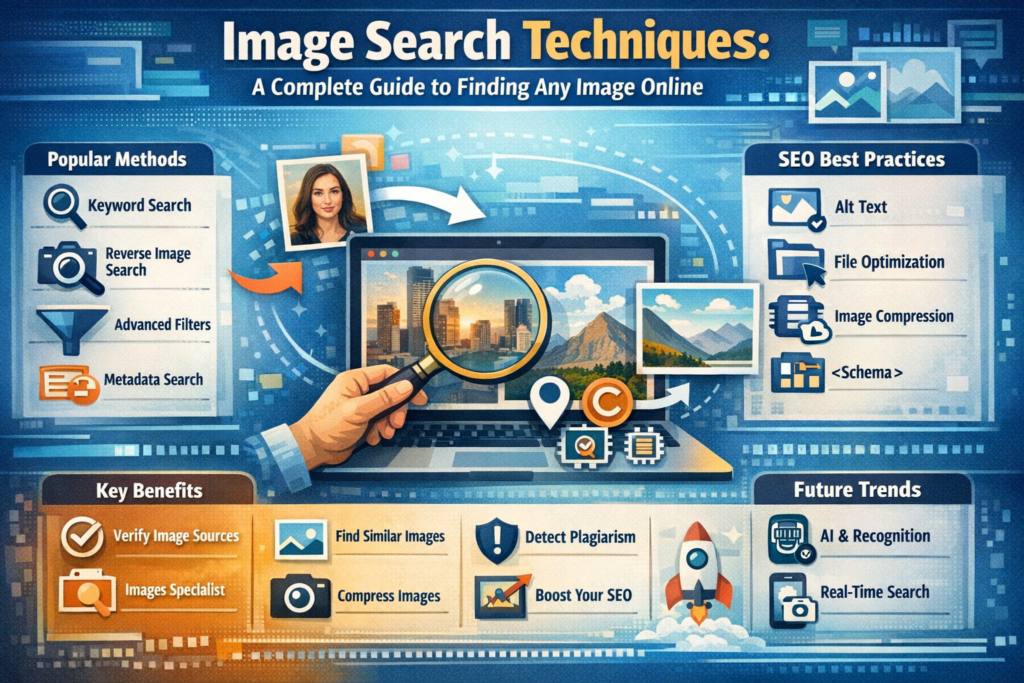
Image Search Techniques
In today’s digital world, images play a crucial role in communication, marketing, and content creation. Whether you’re a blogger, SEO expert, designer, or casual internet user, mastering image search techniques can save time, verify authenticity, and improve your content strategy.
This guide explores the most effective methods, including advanced reverse image search techniques, to help you find exactly what you’re looking for online.
What Are Image Search Techniques?
Image search techniques are methods used to find images on the internet using keywords, visuals, or metadata. Instead of relying solely on text-based searches, these techniques allow users to locate images based on visual similarity, source, size, or usage rights.
Why Image Search Matters in 2026
With the rise of visual content and AI-generated images, effective image searching is more important than ever. Here’s why:
- Verify image authenticity (combat fake news)
- Find copyright-free images
- Track image usage across the web
- Discover high-quality visuals for content
- Improve SEO and user engagement
Top Image Search Techniques You Should Know
1. Keyword-Based Image Search
This is the most basic method. You simply enter descriptive keywords into search engines.
Tips for better results:
- Use specific phrases (e.g., “modern office interior design 2026”)
- Add filters like color, size, or usage rights
- Use long-tail keywords for precision
2. Reverse Image Search Techniques (Most Powerful)
Reverse image search techniques allow you to search using an image instead of text. This is extremely useful for identifying unknown images or finding similar ones.
How it works:
- Upload an image or paste its URL
- The search engine analyzes visual patterns
- It returns similar images and sources
Use cases:
- Find the original source of an image
- Detect plagiarism or stolen images
- Identify products, landmarks, or people
- Discover higher resolution versions
3. Using Advanced Search Filters
Most search engines provide advanced tools to refine your results:
- Size: Large, medium, icon
- Color: Black & white, transparent, specific colors
- Type: Photo, clipart, illustration
- Time: Recently uploaded images
- Usage rights: Free to use or modify
These filters are essential for content creators and SEO professionals.
4. Image Metadata Search
Some images contain metadata (EXIF data), which includes:
- Camera type
- Date taken
- Location (GPS)
You can extract this data using tools to gain insights about the image’s origin.
5. Visual Similarity Search
AI-powered tools now allow you to find visually similar images based on:
- Shapes
- Colors
- Objects
- Patterns
This is especially useful for:
- Designers looking for inspiration
- E-commerce product matching
- Branding consistency
6. Social Media Image Search
Platforms like Pinterest and Instagram offer built-in visual search tools.
Benefits:
- Discover trending visuals
- Find niche-specific content
- Analyze competitor strategies
Best Practices for SEO Using Image Search
If you want your images to rank on Google, follow these optimization tips:
Optimize File Names
Use descriptive, keyword-rich filenames:
- Example:
reverse-image-search-techniques-guide.jpg
Add Alt Text
Include your LSI keyword naturally:
- Example: “Example of reverse image search techniques in action”
Compress Images
Improve page speed without losing quality.
Use Structured Data
Helps search engines understand your images better.
Create Original Visual Content
Unique images rank higher and attract backlinks.
Common Mistakes to Avoid
- Using copyrighted images without permission
- Ignoring alt text and metadata
- Uploading low-quality or blurry images
- Not optimizing for mobile users
- Overstuffing keywords unnaturally
Future of Image Search
With advancements in AI and machine learning, image search is evolving rapidly. Features like:
- Object recognition
- Facial recognition
- Real-time camera search
are becoming more accurate and accessible. Mastering modern reverse image search techniques will be a key skill for digital professionals in the coming years.
Conclusion
Mastering image search techniques is no longer optional—it’s essential for SEO, content creation, and digital verification. From basic keyword searches to advanced reverse image search techniques, each method serves a unique purpose.
For More information Visit Our Homepage:


